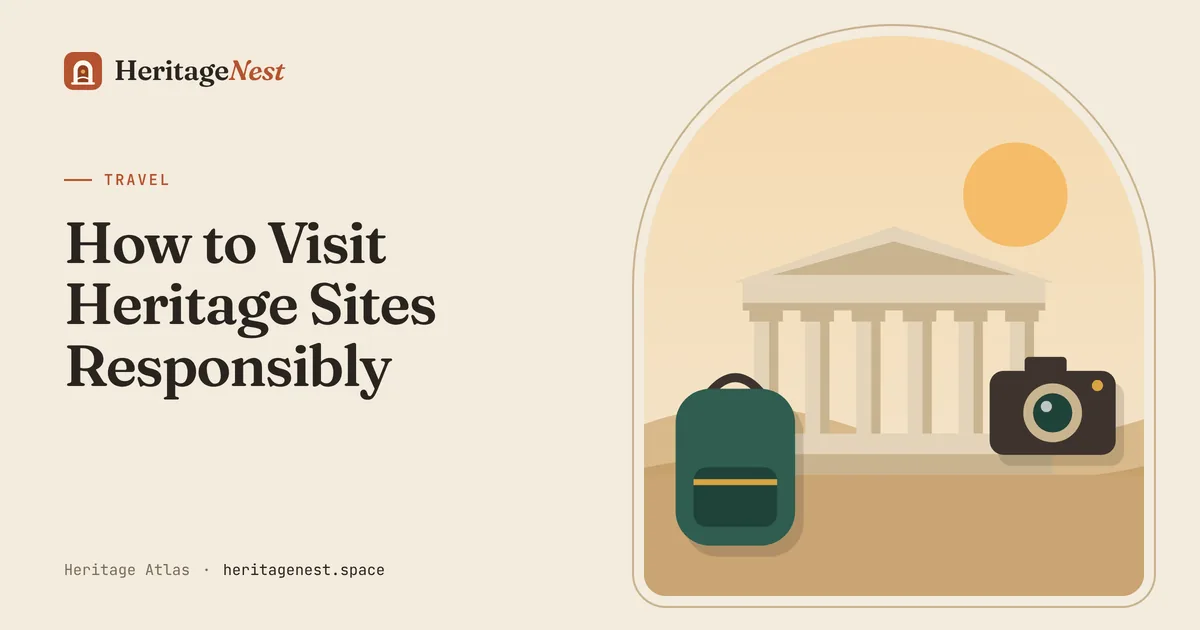
Most damage to famous sites is not done by vandals. It is done slowly, by millions of ordinary visitors who each touch a wall, step off a path or take home a small stone. One visitor makes no difference; a million visitors a year do. The good news is that a few simple habits make a real difference.
Look, don’t touch
The oils and salts on our hands slowly stain and wear stone, plaster and paint. Carvings that have survived for two thousand years can be rubbed smooth by a few decades of tourists’ fingers. Resist the urge to touch, and never lean on or sit on walls that are not meant for it.
Stay on the paths
Paths and barriers are not there to spoil your photos. Walking on unexcavated ground compacts buried layers, breaks fragile remains and erodes slopes. Climbing on ruins is dangerous for you and for them.
Take only photographs
A broken piece of pottery on the ground may look like rubbish, but it is part of the archaeological record — its position helps archaeologists date and understand the site. Taking objects is illegal at most sites and, at a busy site, quickly strips it bare. If you find something interesting, leave it where it is and tell a guard or guide.
A souvenir taken from a site is a piece of evidence that is lost for good.
Respect the rules on photography and drones
Flash can fade ancient paintings over time, which is why many tombs and caves ban it. Drones usually need a permit and can be banned outright for safety and security. Follow the rules even when others don’t.
Dress and behave for the place
Many heritage sites are also places of worship. Cover shoulders and knees where expected, remove shoes when asked, keep your voice down and ask before photographing people, especially during prayers or ceremonies.
Leave no trace
Carry your rubbish out, never add graffiti — even “harmless” names scratched into stone are permanent damage — and avoid eating inside monuments. Litter attracts animals and stains surfaces.
Spread the load
Visit early in the morning, late in the afternoon or outside peak season. You will enjoy the site more, and crowds are easier for guards and guides to manage. Consider a lesser-known site nearby: our sites near a city guides are a good place to start.
Support the people who look after it
Pay entry fees, hire licensed local guides and buy from local businesses. Ticket income often pays for conservation and guards, and a good guide will show you far more than you would find alone.
Report damage
If you see someone damaging a site, tell the staff. If you spot new graffiti, a collapsing wall or signs of illegal digging, reporting it can help protect the site for the next visitor.